A jean is decided in the drum, not on the sketch.
Two factories can sew the same pattern and still ship two different products, because the wash is where shade, hand feel and wear pattern are set. We develop it on your fabric, against your reference, and send you the result to approve before anything is cut.
Sampling with washing included runs 5–10 days. Our wash partner sits in the same district as our floor, in a cluster of more than a thousand denim workshops.
- Sample with wash
- 5–10 days, washing included
- Wash partner
- Long-term dye-house, same district
- Routes we run
- Six families, from rinse to hand work
- Approval
- Sealed sample before bulk
The six routes we run.
Most styles are a combination rather than one route — a tint over an enzyme base, a spray over a bleach. This is the vocabulary we quote in.
01Rinse
Clean indigo, no abrasion, minimal shrinkage left. The ground every other wash sits on, and the cheapest route to a wearable first sample.
02Enzyme & stone
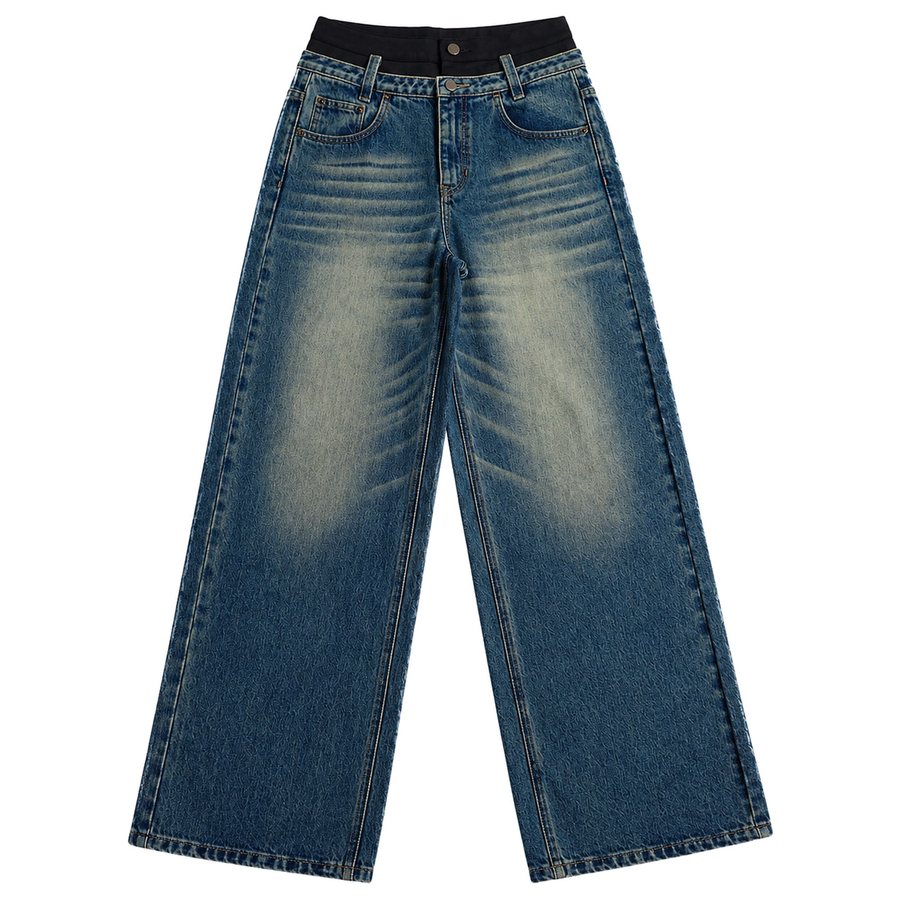
Hand feel and surface. Softens the cloth, lifts the edges, gives the dusty look that reads as "worn in" rather than "washed once".
03Bleach & acid
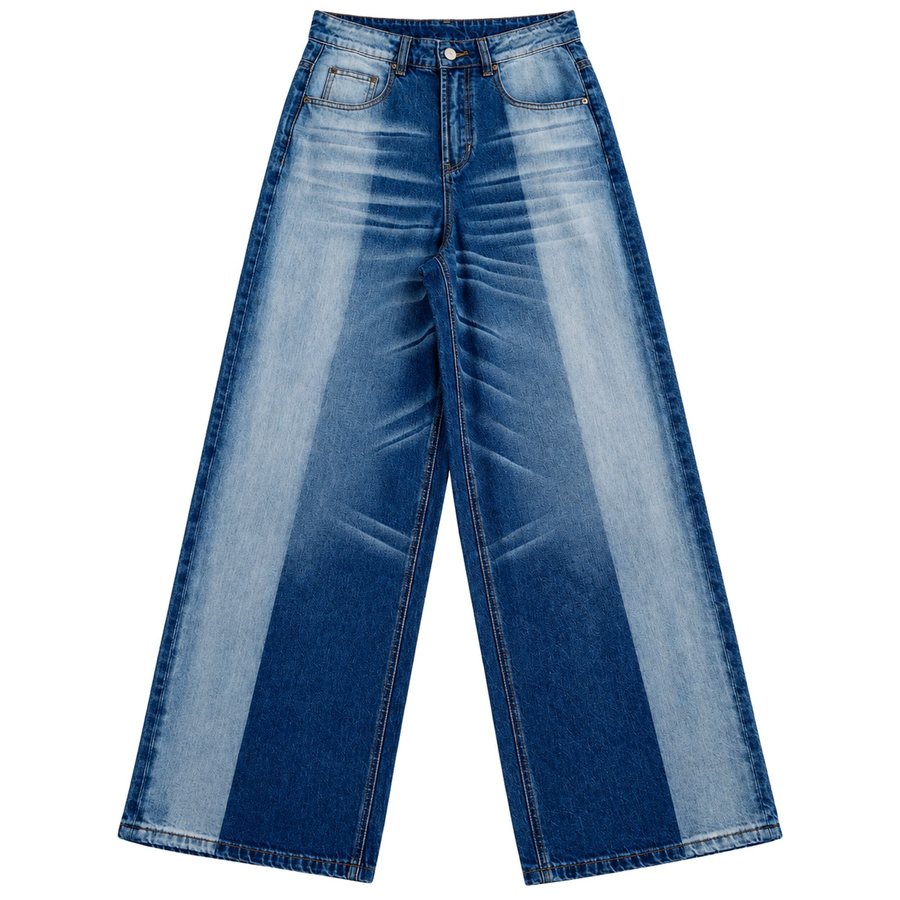
Contrast. Local bleaching for high-and-low panels, acid spray for the spot and snow effects that hold up in a lookbook photo.
04Tint & overdye
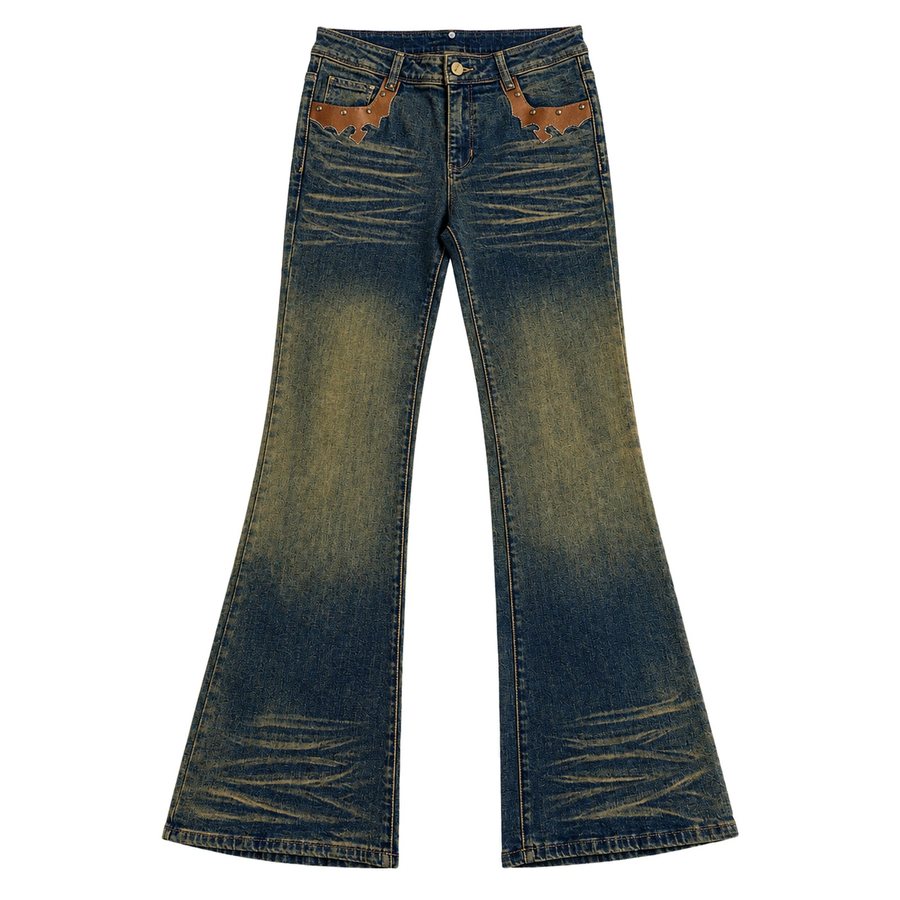
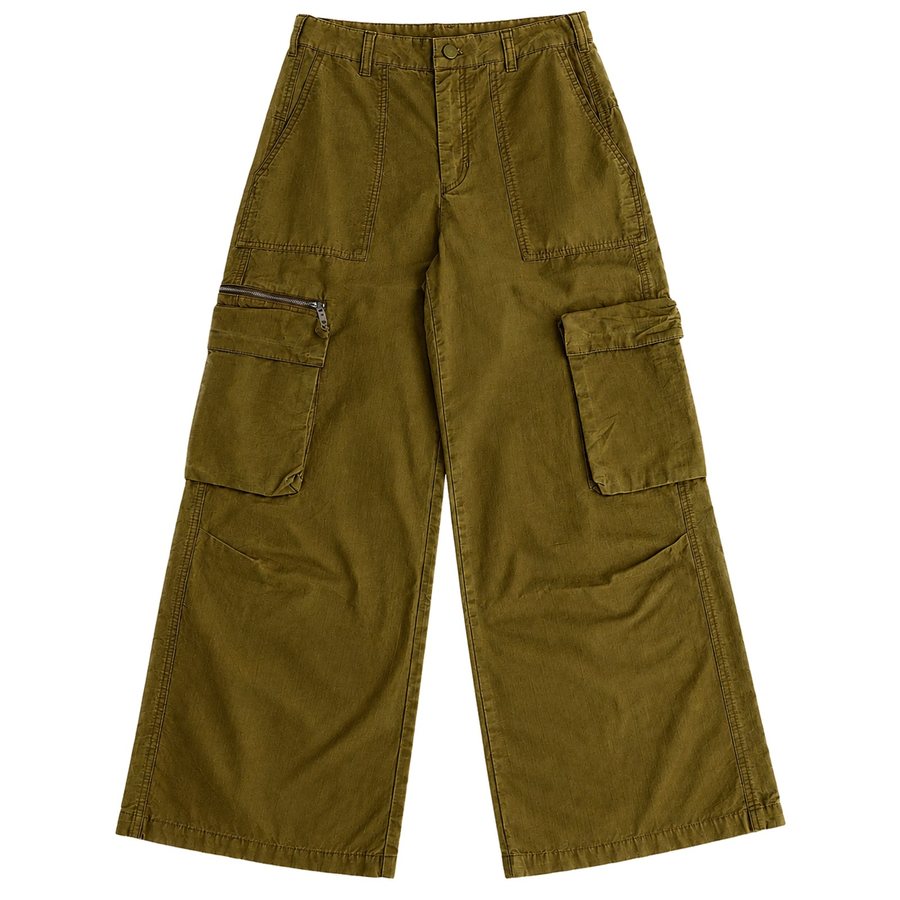
Casting the base colour — grey, khaki, olive, green over indigo. Also the route for sulphur black and the "not-quite-blue" shades buyers ask for.
05Spray & gradient
Hand work with a spray gun: tonal gradients, shadow on the thigh, a fade that runs down one leg. Done by hand, so the repeat is a judgement, not a formula.
06Distress, repair & patchwork
Cutting, scraping, whiskers, darning and panel work. The slowest and most expensive of the six, and the one that most clearly separates a development house from a contract sewing shop.
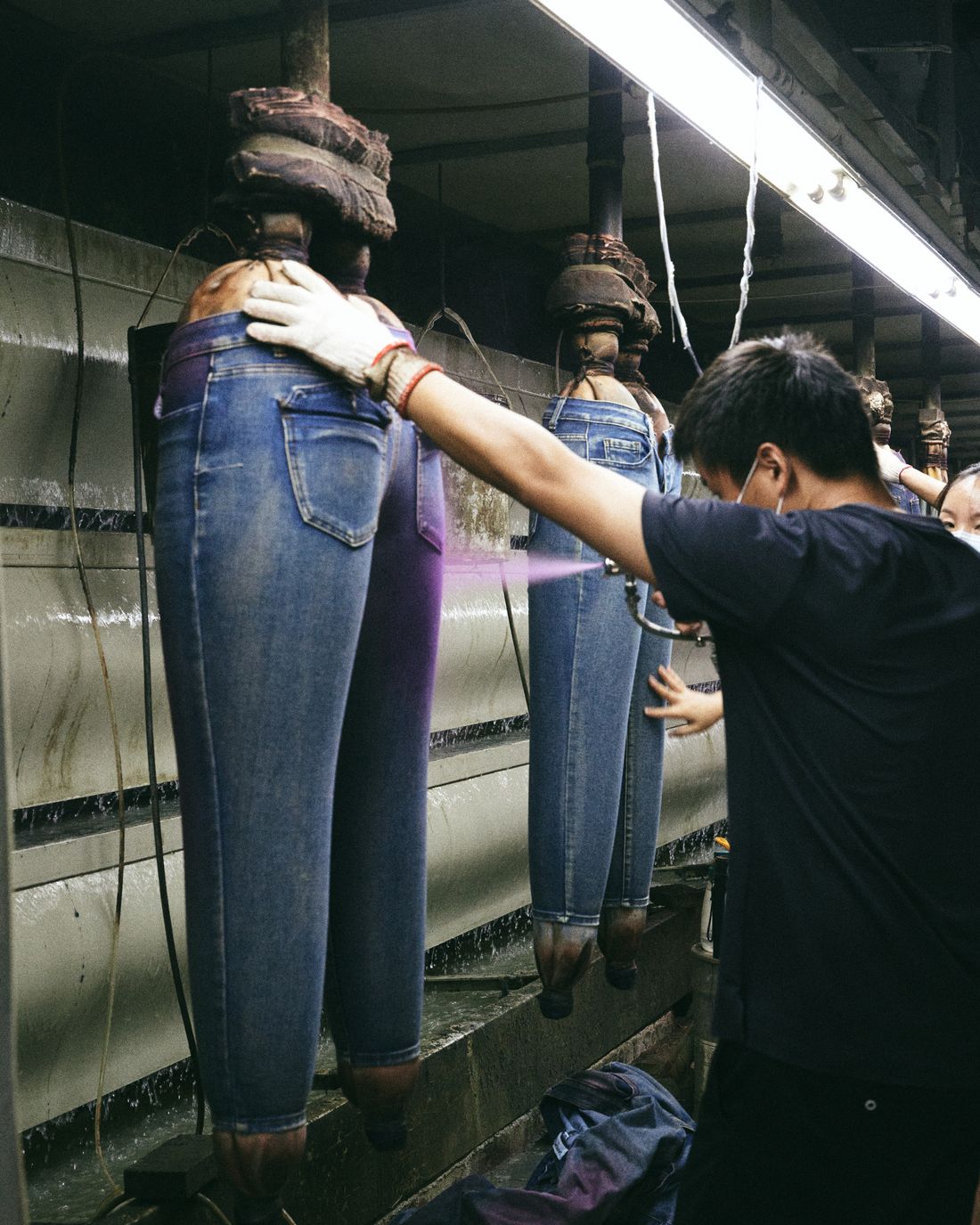
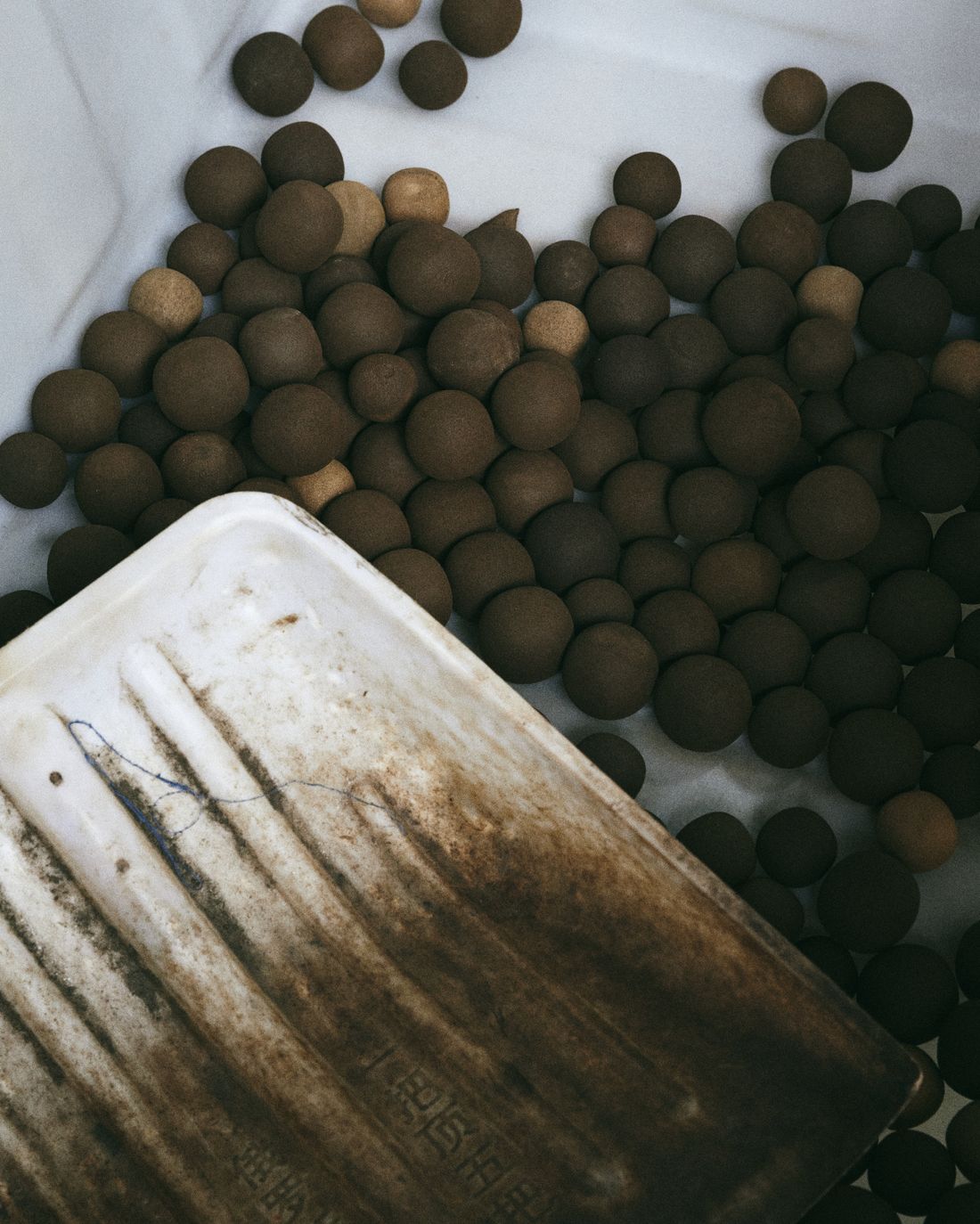
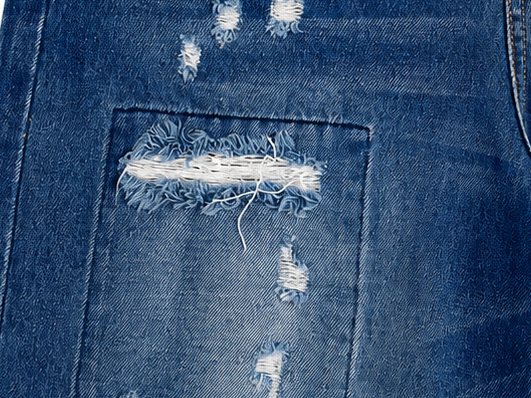
The range, on our own samples.
Four of our own development pieces, four different decisions in the drum — from a barely-touched indigo to a full olive cast.
How a wash gets matched.
Reference
Send a photo in daylight, or the garment itself. Tell us the base fabric you intend to use — weight and stretch change the result more than the recipe does.
Trial on your fabric
We run the first trial on your cloth and send photographs under one light source. Two or three rounds is normal; anyone promising one is guessing.
Seal and repeat
The approved sample is sealed and becomes the shade reference for bulk — same partner, same route, checked against that sample as it comes out of the drum.
What actually moves the price.
| Variable | Why it costs |
|---|---|
| Number of routes per style | Each route is a separate pass through the dye-house. A tint over an enzyme base is two passes, not one. |
| Hand minutes | Spray, scraping and darning are paid by the minute, not by the piece. This is where a "simple" wash doubles in cost. |
| Base fabric | Indigo and sulphur black behave differently in the same recipe. Changing the fabric after the wash is approved restarts the development. |
| Shade tolerance | A tight tolerance across a large order means more passes and more rejects. We quote the tolerance, not just the colour. |
What to send us.
A photo of the wash you want, taken in daylight, flat rather than on a body. The garment itself if you have one. Your base fabric, or the weight and stretch you are aiming for. Your target price, so we tell you which of the six routes is realistic before you fall in love with one.